IPRC KITABI launches a new module titled “Human Rights and Conservation”
On 25th November 2021, the Integrated Polytechnic Regional college of Kitabi (IPRC KITABI) alongside with its counter partners held a virtual launch ceremony of Human Rights and Conservation module with the aim to integrate human rights principles in conservation.
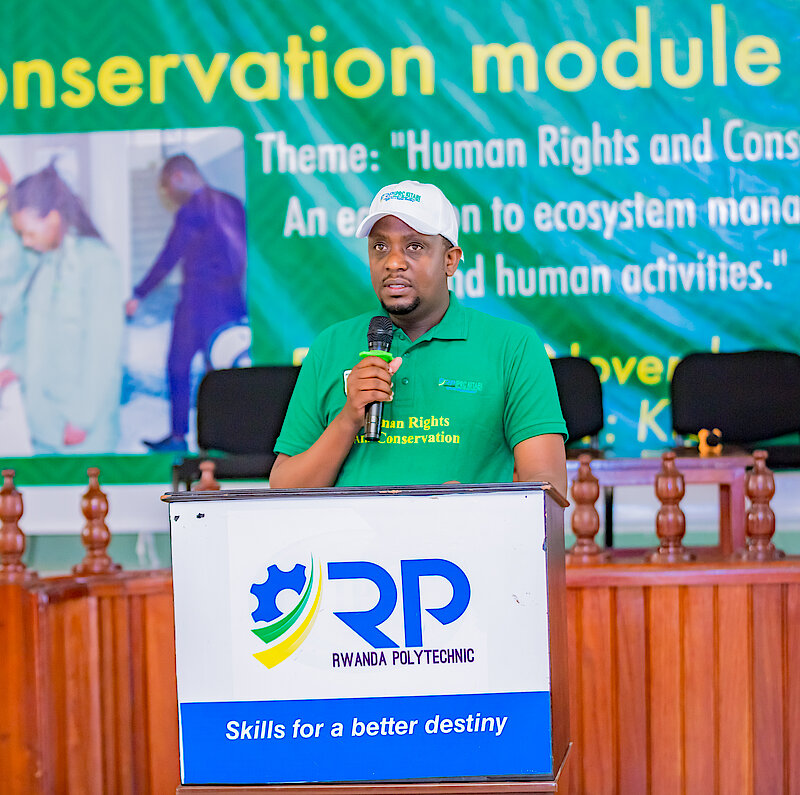 Richard NASASIRA, Principal of IPRC KITABI addressing his remarks
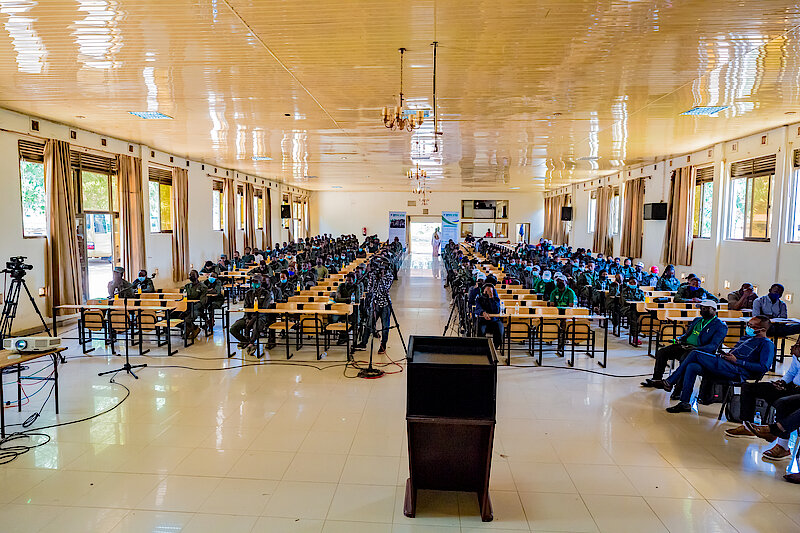
The module launch brought together government officials, representatives from different organizations with interventions in conservation and IPRC KITABI students, while others attended virtually.
This module was launched under the theme: “Human Rights and Conservation: An equation to ecosystem management and human rights activities.”
Human Rights and Conservation module is located in the department of Nature Conservation, program of Advanced Diploma in Wildlife and Conservation Technologies and it is concerned with social law, social requirements in natural resources management and protocol to be used in land use interventions. Actions to conserve nature and natural resources are closely related to the rights of people to secure their livelihoods, enjoy healthy and productive environments and live with dignity.
In his opening remarks, Principal of IPRC KITABI Mr. Richard NASASIRA said that the ceremony was a celebration of a long-term good partnership and support from US FISH and Wildlife Services through generation grants since 2016.
The U.S. Fish and Wildlife Service is the premier US agency dedicated to the conservation, protection, and enhancement of fish, wildlife and plants and their habitats.
“Actions to conserve nature and natural resources are closely related to the rights of people to secure their livelihoods, enjoy a healthy and productive environment. The pursuit of conservation goals can contribute positively to the realization of many fundamental human rights and securing rights such as land tenure and participation in decision making will promote effective environmental stewardship” Nasasira stated.
Principal Richard NASASIRA also added that IPRC KITABI's vision is to develop "Skills for a better destiny" through conservation curriculum at IPRC KITABI, as well as in other academic programs.
Human Rights and Conservation module will provide students with knowledge and skills necessary for integrating human rights in biodiversity conservation and natural resources management. The module explores the navigation of different sources of law, application of rights and law to conservation, development, and responsibilities of the state and non-state organizations (Private sector, NGOs).
Mr. Charles KARANGWA, who is the Regional Head, Land systems IUCN ESARO and Rwanda Country Representative talked about Human Rights and Forest Landscape Restoration.
Karangwa said: “Forest Landscape Restoration unlocks multiple benefits to multiple challenges. The benefits include improved livelihoods, food security, water security, climate change mitigation and adaptation, gender equality and empowerment among others.”
SUGIRA Pacifique, a year two student in Wildlife Management said: “We actually learn courses related to human rights in biodiversity and nature conservation but did not go deeper into much details. The new module will specifically enlighten the relationship between human rights and conservation. This will furnish the students with knowledge and skills related to human rights and conservation, and of course will help people to enjoy better livelihoods and reduce threats on biodiversity.”
Aline Dufitumukiza, a finalist student at IPRC Kitabi stressed that the module comes in handy for students to perform well on the labor market in nature conservation.
The module was developed and launched in partnership with different stake holders namely US Fish and Wildlife Services, USAID, US Forest Department of Agriculture, CARPE, RIFFEAC.
Human rights occupies a prominent place in strategies for the conservation and sustainable management of natural resources. The 12th General Assembly of International Union for the Conservation of Nature (IUCN) held at Kinshasa in the Democratic Republic of Congo (DRC) in 1975 adopted a resolution recognizing for the first time the need to take into account human rights of indigenous peoples and local people in the process of creating protected areas.
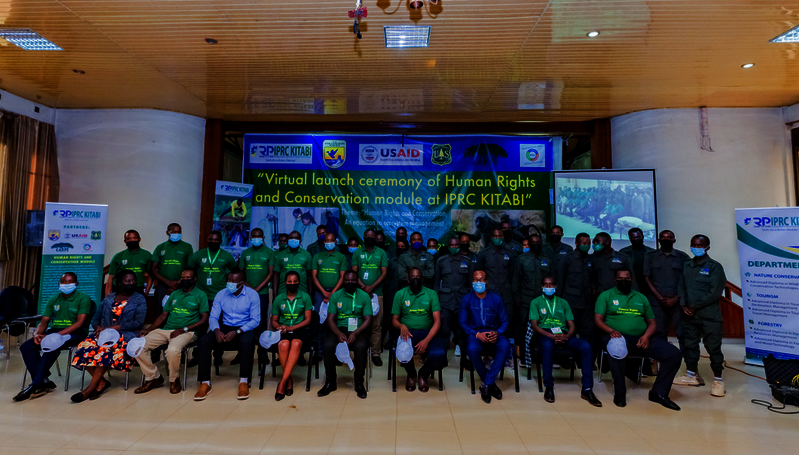 Group photo for the participants
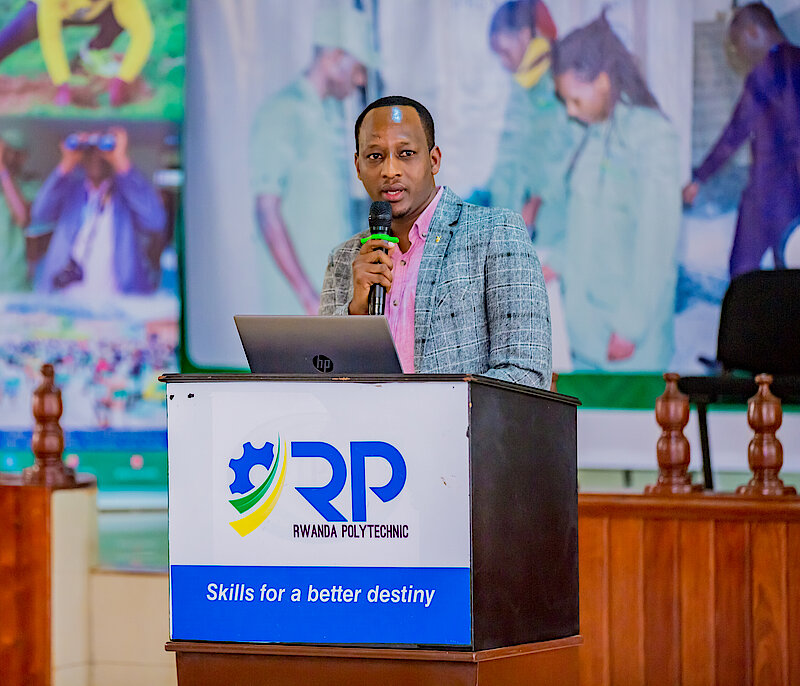 Richard Muvunnyi, Head of Wildlife Veterinary, Research and Monitoring Unit at Rwanda Development Board (RDB)
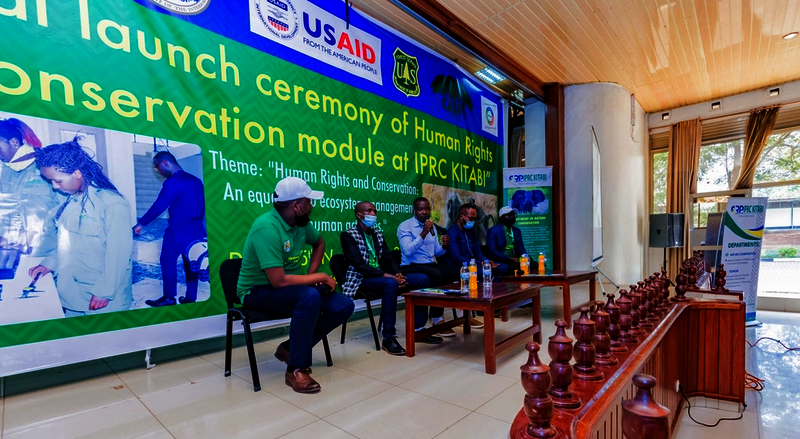 Pannelists discussing on the topic: "Human Rights and Conservation: An equation to ecosystem management and human activities"
 An IPRC KITABI student taking some notes at the launch of Human Rights and Conservation module